Blogs

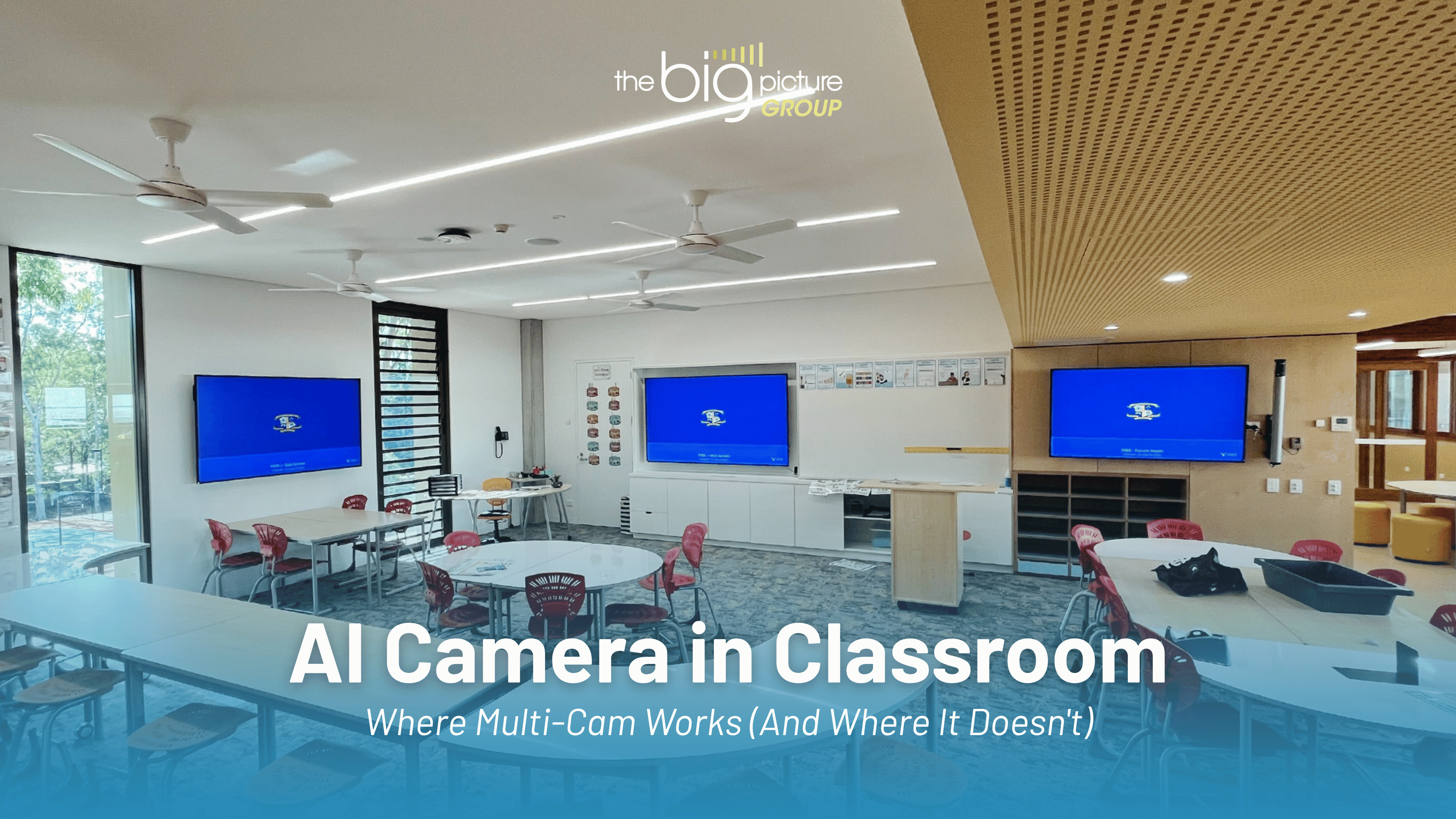
AI Cameras in Classrooms: Where Multi-Cam Actually Works (And Where It Doesn't)

April 13, 2026
The Big Picture Group 1300 799 734
ISE 2026 · Barcelona AV Technology · AI Cameras · School Standards

AI Cameras in Classrooms: Where Multi-Cam Actually Works — And Where It Doesn't

Think of ISE as the AV industry's annual benchmark. Four days at Fira Barcelona, wall-to-wall with manufacturers, integrators, and enough product demos to make your head spin. The trick is knowing what actually translates back to your spaces.

Mark Skehan on the floor at ISE 2026, Fira Barcelona
Mark Skehan on the floor at ISE 2026, Fira Barcelona — February 2026.

Mark Skehan, AV Technology Specialist and CEO of The Big Picture Group, attended ISE 2026 to cut through the noise and find out what the latest innovations mean for AV in the real world.

His headline takeaway was simple: the AV industry is evolving, not revolutionising. No magic box. No single product that changes everything overnight. Just a few clear shifts that matter if you're the person keeping classrooms, halls, and meeting spaces working day after day.

AI multi-cam works. In the right room.

AI-powered cameras are everywhere right now. Multi-camera setups that can track a presenter, switch angles, and frame shots without an operator. Mark's view from ISE was measured.

The AV industry, for the most part, is evolving, not revolutionising. There's nothing you'd sit there and go, that's a game changer. However, the biggest evolution is obviously AI in cameras and how multi-camera solutions are working in meeting spaces and larger classrooms. They can have multi-cameras using AI to switch between cameras without the use of an operator.

— Mark Skehan

In the right space, this is a genuine step forward. It gives schools a way to capture lessons, events, or hybrid sessions without needing a person behind a switcher.

But the technology has to be teacher-proof, or it dies. If a teacher does two recordings and the camera tracks the wrong person both times, they're done. The system gathers dust, and everyone quietly agrees that "AI cameras don't work." The camera wasn't the issue. The room setup was.

Where it works

Rooms designed for it

  • Defined presenter zones
  • Consistent, controlled lighting
  • Clean sightlines — no pillars
  • Lecture theatres & purpose-built spaces
  • Rooms you can adapt without pain
Where it falls apart

Rooms that fight back

  • Uneven or uncontrolled lighting
  • Big windows without blinds
  • Small rooms, teacher 2m from front row
  • Highly dynamic spaces
  • Bad audio — always bad audio

Audio. The part everyone forgets.

This is where schools get caught. They buy for the video and forget the audio. Then they end up with footage that looks fine and sounds terrible. Students don't engage with it. Staff stop recording because it feels pointless.

Whilst AI is having a big impact on camera technology, it really hasn't done much in audio land as far as audio DSP goes. I think there's the biggest opportunity there.

— Mark Skehan

Good video with bad audio is still bad. If you can't control the lighting and you can't control the audio, AI multi-cam is not where you should spend money first.

Case study · La Salle University, Barcelona

What La Salle got right: it wasn't the gear, it was the thinking

While at ISE, Mark visited La Salle University in Barcelona on behalf of AVIXA TV. What he saw is a blueprint for thinking beyond the camera.
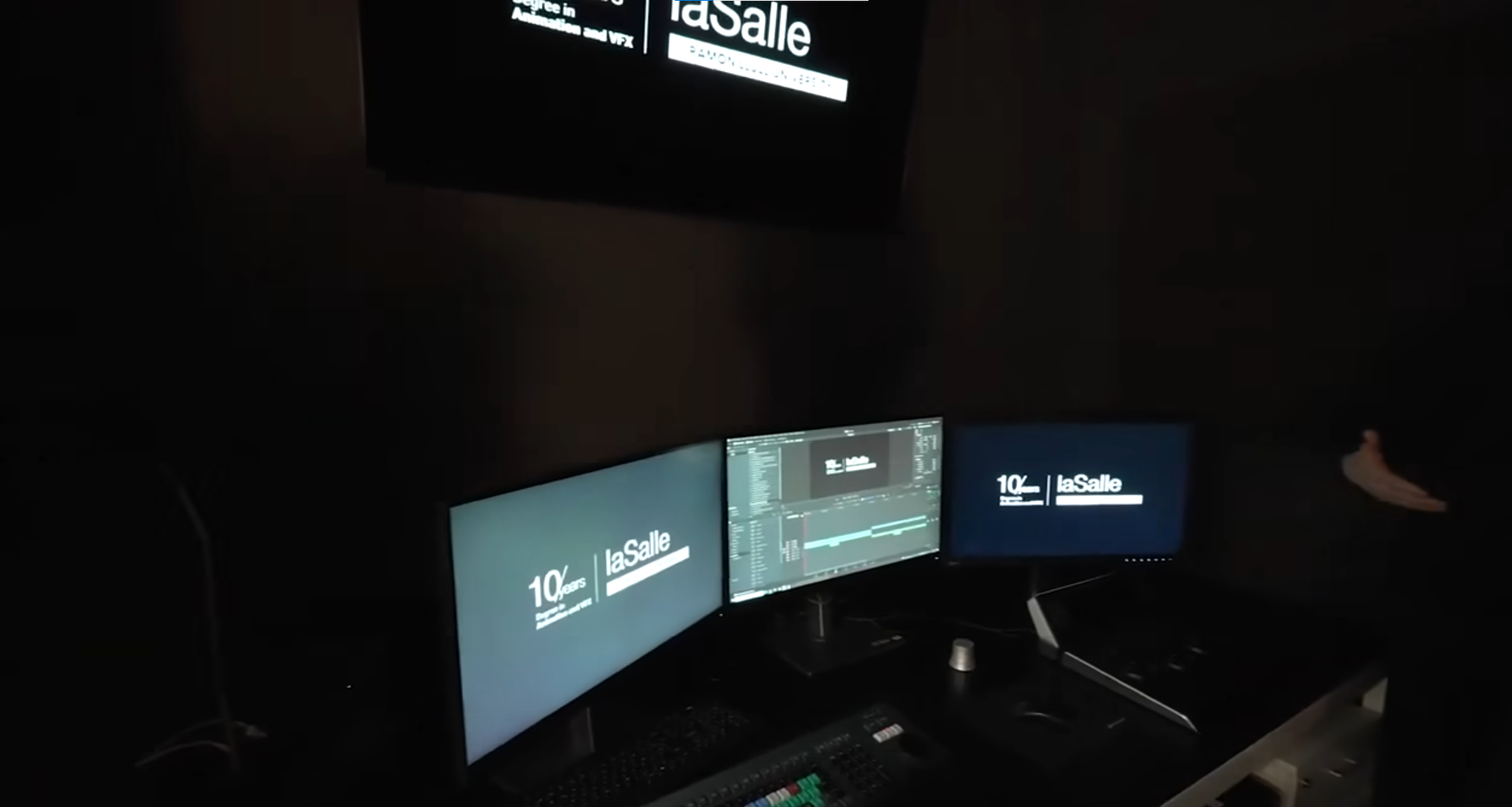
La Salle University post-production suite, Barcelona
La Salle University's post-production suite — one stop in a start-to-finish content environment.

Spaces for virtual production. Post-production suites running DaVinci Resolve. An anechoic room to study acoustics. A calibrated 7.1.4 Dolby Atmos studio. And everything comes together in their immersive room with edge-blended projection wrapping the space.

"What impressed me most was that they have all the areas to create content and then get it all the way through to the immersive room. It's a start-to-finish environment."

Most schools aren't building anechoic chambers. That's not the point. Technology works when it's connected, deliberate, designed to be used, supported, and repeated. Watch Mark's full AVIXA TV visit →

The most common mistake schools make

This part wasn't about AI. It was about how schools plan.

What most schools don't do that the good schools do is they don't build standards.

— Mark Skehan

The schools who win long-term aren't always the ones buying the fanciest gear. They're the ones building standards that make AV predictable across campus. Not always the same brand. Not always the same model. Sometimes it's the same control approach. The same user interface. The same experience from room to room.

Because that's what reduces training time, reduces tickets, and makes upgrades easier instead of harder.

What to prioritise in the next 3–5 years

01

Standards first

Build a base you can scale. Standard AV-over-IP, video and audio distribution, control where possible.

02

Internal capability

Schools need their own capability too. The demand for change won't always fit holiday install windows.

03

Service contracts

Not an afterthought. SLAs and service contracts as part of the plan, not a reaction to something breaking.

Before you buy anything

Mark's not excited by shiny tech for its own sake. He's excited by what it makes possible for students. The schools that get results aren't the ones with the fanciest camera — they're the ones that understand their spaces, sort out their audio, build standards, and work with someone who'll tell them the truth before the purchase order, not after.

Get brutally honest about the room first
  • Is the lighting consistent and controllable? Big windows without blinds = problem
  • Is there a defined presenter zone? AI needs somewhere to look
  • Are sightlines clean? No pillars, no partitions fighting the cameras
  • Is the audio already good? Or are you hoping the camera will fix it?
  • Are you building a standard you can repeat? Or a one-off that becomes a special case forever?
The Big Picture Group view

Technology is the enabler. If it doesn't get used, or it creates friction, or it turns into another thing the IT team has to babysit — it misses the point.

The thread we care about: understand your spaces, sort out your audio, build standards, and work with someone who'll tell you the truth before the purchase order, not after.

That's exactly what we're here for.

Talk to our team

Not sure where to start? That's what we're here for.

Whether it's AI cameras, lecture capture, meeting room AV, or a full campus-wide rollout — we help you figure out what actually fits your spaces and your budget. No fluff. Straight advice.

Contact Us →

Available Products

Connect With Us

Ready to enhance your communication and storytelling? Discover our range of innovative technology solutions. Let's connect and take your experience to the next level

Blogs

AI Cameras in Classrooms: Where Multi-Cam Actually Works (And Where It Doesn't)

AI Cameras in Classrooms: Where Multi-Cam Actually Works (And Where It Doesn't)

April 13, 2026
The Big Picture Group 1300 799 734
ISE 2026 · Barcelona AV Technology · AI Cameras · School Standards

AI Cameras in Classrooms: Where Multi-Cam Actually Works — And Where It Doesn't

Think of ISE as the AV industry's annual benchmark. Four days at Fira Barcelona, wall-to-wall with manufacturers, integrators, and enough product demos to make your head spin. The trick is knowing what actually translates back to your spaces.

Mark Skehan on the floor at ISE 2026, Fira Barcelona
Mark Skehan on the floor at ISE 2026, Fira Barcelona — February 2026.

Mark Skehan, AV Technology Specialist and CEO of The Big Picture Group, attended ISE 2026 to cut through the noise and find out what the latest innovations mean for AV in the real world.

His headline takeaway was simple: the AV industry is evolving, not revolutionising. No magic box. No single product that changes everything overnight. Just a few clear shifts that matter if you're the person keeping classrooms, halls, and meeting spaces working day after day.

AI multi-cam works. In the right room.

AI-powered cameras are everywhere right now. Multi-camera setups that can track a presenter, switch angles, and frame shots without an operator. Mark's view from ISE was measured.

The AV industry, for the most part, is evolving, not revolutionising. There's nothing you'd sit there and go, that's a game changer. However, the biggest evolution is obviously AI in cameras and how multi-camera solutions are working in meeting spaces and larger classrooms. They can have multi-cameras using AI to switch between cameras without the use of an operator.

— Mark Skehan

In the right space, this is a genuine step forward. It gives schools a way to capture lessons, events, or hybrid sessions without needing a person behind a switcher.

But the technology has to be teacher-proof, or it dies. If a teacher does two recordings and the camera tracks the wrong person both times, they're done. The system gathers dust, and everyone quietly agrees that "AI cameras don't work." The camera wasn't the issue. The room setup was.

Where it works

Rooms designed for it

  • Defined presenter zones
  • Consistent, controlled lighting
  • Clean sightlines — no pillars
  • Lecture theatres & purpose-built spaces
  • Rooms you can adapt without pain
Where it falls apart

Rooms that fight back

  • Uneven or uncontrolled lighting
  • Big windows without blinds
  • Small rooms, teacher 2m from front row
  • Highly dynamic spaces
  • Bad audio — always bad audio

Audio. The part everyone forgets.

This is where schools get caught. They buy for the video and forget the audio. Then they end up with footage that looks fine and sounds terrible. Students don't engage with it. Staff stop recording because it feels pointless.

Whilst AI is having a big impact on camera technology, it really hasn't done much in audio land as far as audio DSP goes. I think there's the biggest opportunity there.

— Mark Skehan

Good video with bad audio is still bad. If you can't control the lighting and you can't control the audio, AI multi-cam is not where you should spend money first.

Case study · La Salle University, Barcelona

What La Salle got right: it wasn't the gear, it was the thinking

While at ISE, Mark visited La Salle University in Barcelona on behalf of AVIXA TV. What he saw is a blueprint for thinking beyond the camera.

La Salle University post-production suite, Barcelona
La Salle University's post-production suite — one stop in a start-to-finish content environment.

Spaces for virtual production. Post-production suites running DaVinci Resolve. An anechoic room to study acoustics. A calibrated 7.1.4 Dolby Atmos studio. And everything comes together in their immersive room with edge-blended projection wrapping the space.

"What impressed me most was that they have all the areas to create content and then get it all the way through to the immersive room. It's a start-to-finish environment."

Most schools aren't building anechoic chambers. That's not the point. Technology works when it's connected, deliberate, designed to be used, supported, and repeated. Watch Mark's full AVIXA TV visit →

The most common mistake schools make

This part wasn't about AI. It was about how schools plan.

What most schools don't do that the good schools do is they don't build standards.

— Mark Skehan

The schools who win long-term aren't always the ones buying the fanciest gear. They're the ones building standards that make AV predictable across campus. Not always the same brand. Not always the same model. Sometimes it's the same control approach. The same user interface. The same experience from room to room.

Because that's what reduces training time, reduces tickets, and makes upgrades easier instead of harder.

What to prioritise in the next 3–5 years

01

Standards first

Build a base you can scale. Standard AV-over-IP, video and audio distribution, control where possible.

02

Internal capability

Schools need their own capability too. The demand for change won't always fit holiday install windows.

03

Service contracts

Not an afterthought. SLAs and service contracts as part of the plan, not a reaction to something breaking.

Before you buy anything

Mark's not excited by shiny tech for its own sake. He's excited by what it makes possible for students. The schools that get results aren't the ones with the fanciest camera — they're the ones that understand their spaces, sort out their audio, build standards, and work with someone who'll tell them the truth before the purchase order, not after.

Get brutally honest about the room first
  • Is the lighting consistent and controllable? Big windows without blinds = problem
  • Is there a defined presenter zone? AI needs somewhere to look
  • Are sightlines clean? No pillars, no partitions fighting the cameras
  • Is the audio already good? Or are you hoping the camera will fix it?
  • Are you building a standard you can repeat? Or a one-off that becomes a special case forever?
The Big Picture Group view

Technology is the enabler. If it doesn't get used, or it creates friction, or it turns into another thing the IT team has to babysit — it misses the point.

The thread we care about: understand your spaces, sort out your audio, build standards, and work with someone who'll tell you the truth before the purchase order, not after.

That's exactly what we're here for.

Talk to our team

Not sure where to start? That's what we're here for.

Whether it's AI cameras, lecture capture, meeting room AV, or a full campus-wide rollout — we help you figure out what actually fits your spaces and your budget. No fluff. Straight advice.

Contact Us →

Available Products

Connect With Us

Ready to enhance your communication and storytelling? Discover our range of innovative technology solutions. Let's connect and take your experience to the next level